Engineering surfaces by simulation.
Validated models of how surfaces behave with liquids, heat and laser light, for aerospace, biomedical and manufacturing.
Simulation-driven insight for surface engineering
Surface Optimization Research & Consulting (SOREC) LLC is a scientific consulting company founded in 2025 and based in Hattiesburg, Mississippi, USA. We turn advanced research in computational surface science into practical answers for industry.
Surface properties decide whether an aircraft surface sheds ice, whether an implant integrates with bone, and whether a coating performs as designed. Testing every design option experimentally is slow and expensive. SOREC uses validated simulation to narrow the options first, so that physical testing is focused on the designs most likely to work.
Most of our work uses computational fluid dynamics (CFD) and finite-element multiphysics, which describe flow, heat transfer and phase change on real geometries. Where the result depends on nanoscale structure or surface chemistry, we add atomistic simulation.
- Fewer prototypes. Screen surface designs and process settings virtually, then test only the best candidates.
- See what tests cannot. Pressure, temperature and flow inside an impact or a laser-heated zone, where sensors cannot reach.
- Decisions you can defend. Every model is checked against experimental data before it is used for prediction.
- Founded
- 2025
- Headquarters
- Hattiesburg, Mississippi, USA
- Focus sectors
- Aerospace · Biomedical · Advanced manufacturing
- Core methods
- Continuum (CFD and multiphysics FEM) · Molecular and atomistic modeling · Machine learning
What makes us different
SOREC is an independent engineering consultancy that combines validated simulation with surface science, so engineers can choose the right surface solution quickly and at a fixed cost.
No product to sell
We do not sell heaters, coatings or equipment, so our advice is not tied to a product. Our only interest is the right answer for your design.
Answers in days, not months
Studies are scoped up front and delivered at a fixed fee. You do not need to buy software licenses or hire a specialist team to get reliable numbers.
Check our numbers first
Every model is compared with experimental data before it is used, and we publish how it performs. You can try our free drone icing calculator before talking to us.
Try the free icing calculator →From the molecular to the continuum scale
Our background is wettability, laser-textured surfaces and droplet impact and freezing, modeled from the molecular to the continuum scale. For icing, this means we can compare heaters, icephobic coatings, textured surfaces or a combination on your own component, rather than treating ice as a heating problem only.
The right model for the question
We choose the simplest model that answers the question reliably. Continuum simulation is the backbone. Atomistic simulation and machine learning are added only when they improve the answer.
Continuum modeling
Computational fluid dynamics and finite-element multiphysics. Two-phase flow (Volume of Fluid, Level Set), heat transfer, solidification and laser heating, on the real geometry and under real operating conditions.
CFDMultiphysics FEMAtomistic modeling
Molecular dynamics for effects that engineering-scale models cannot capture alone: surface chemistry, oxide layers and nanotexture. The results become inputs to the continuum model.
Molecular dynamicsMachine learning
Surrogate models trained on simulation results. They give near-instant predictions across many design parameters, so large design spaces can be explored and mapped quickly.
Surrogate modelsHow a project runs
Scope & metrics
We agree on the question, the operating conditions and the quantities you need, such as contact angle, splash threshold, ice thickness or surface temperature.
Model & benchmark
We build the model and check it against your measurements or published data before using it for predictions.
Parametric exploration
We run parametric studies over the design variables (texture, material, laser settings, flow conditions) and identify what drives performance.
Report & workflows
You receive a technical report with design recommendations, and on request the simulation files and workflows.
Where our work makes a difference
The same modeling toolkit serves very different industries, because they share one question: how does a surface's structure and chemistry control its interaction with liquids, heat and light?

Aerospace
Icing safety and surface performance in flight.
- Supercooled droplet impact, splash and freezing
- Icephobic and textured surface design
- Laser-processed surfaces for optics and sensors
Drones & UAVs
Flying safely in cold, wet weather.
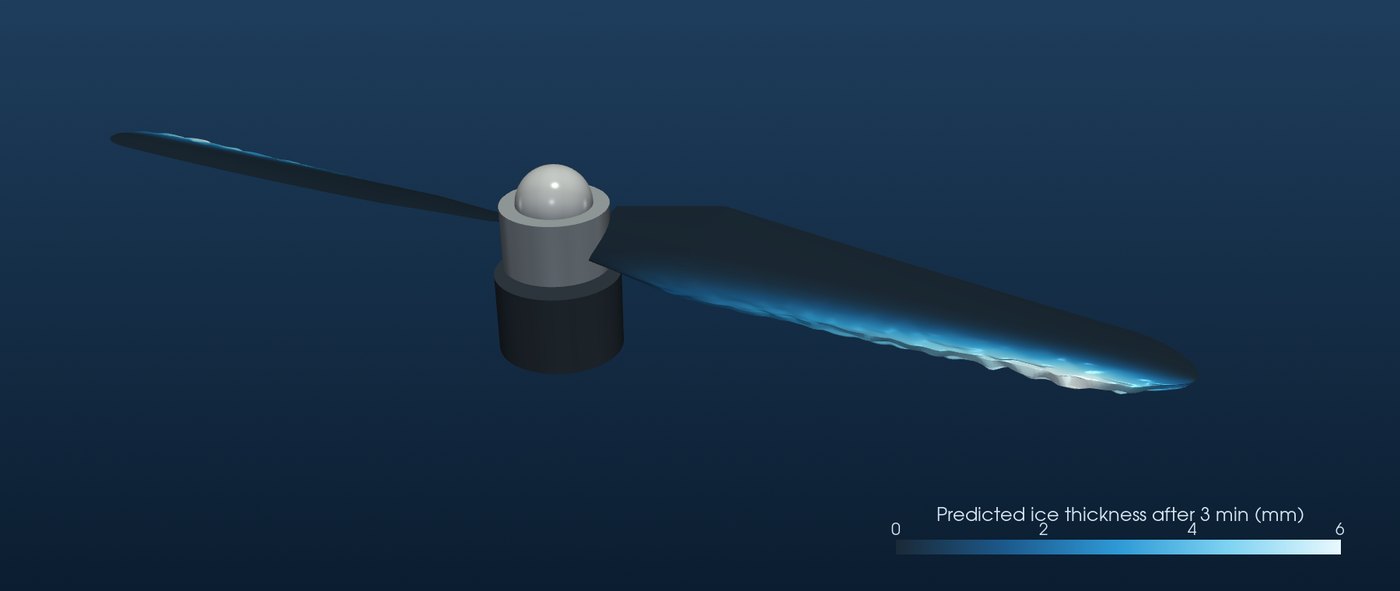
- Ice build-up on propellers and airframes
- Heater power and layout for propeller ice protection
- Icephobic coatings compared on your own propeller
Try the free drone icing calculator → · Validation brief (PDF)

Biomedical
Surfaces that interact well with the body.
- Wettability of laser-textured titanium and stainless steel
- Fluid flow and heat transfer around implant surfaces
- Screening surface designs for implants before fabrication

Advanced manufacturing & energy
Getting the process window right.
- Laser heating, melting and processing windows
- Functional coatings and surface treatments
- Fast ML surrogate models for process design
Try our methods on your own data
Free engineering tools built on SOREC's models. They run in your browser, so nothing you enter or upload leaves your computer.
Drone propeller icing calculator
Ice type, ice growth rate and the heater power needed to keep a drone propeller clear in an icing cloud. Validated against published icing wind tunnel tests.
Open the calculator →Contact angle analyzer
Left and right contact angles from side-view drop images, with automatic baseline detection, manual correction, an annotated image and a CSV of the results.
Open the analyzer →What we offer
Contract research, simulation studies and technical consulting, delivered as reports, validated models and reproducible workflows.
Droplet impact, splash & icing
Predict how droplets hit, splash, spread and freeze on cold, rough or coated surfaces, to support icing protection and icephobic coating development.
Wetting & multiphase flow
Predict how liquids wet, spread on and flow over textured or treated surfaces, to design water-repellent, self-cleaning or fluid-attracting surfaces before fabrication.
Laser processing & thermal modeling
Model heating, melting and cooling during laser processing to find the settings that produce the surface you need, with fewer trial runs on the machine.
Surface chemistry & coatings
When performance depends on the outermost nanometers (oxide layers, nanotexture, coating chemistry), atomistic simulation explains why and feeds the engineering model.
Design maps & fast predictors
Turn many simulations into design maps and fast prediction tools, so your engineers can explore options in seconds instead of waiting on new runs.
Technical consulting & training
Independent review of your simulation workflows and results, and hands-on training for your team in continuum and molecular simulation and in simulation data analysis.
Methods we work with
What we have demonstrated
Internal SOREC projects that show our capabilities on problems our clients face. Technical documentation is available for each.
Simulation that matches high-speed experiments
- Need
- Clients need confidence that a simulation predicts reality before relying on it.
- What we did
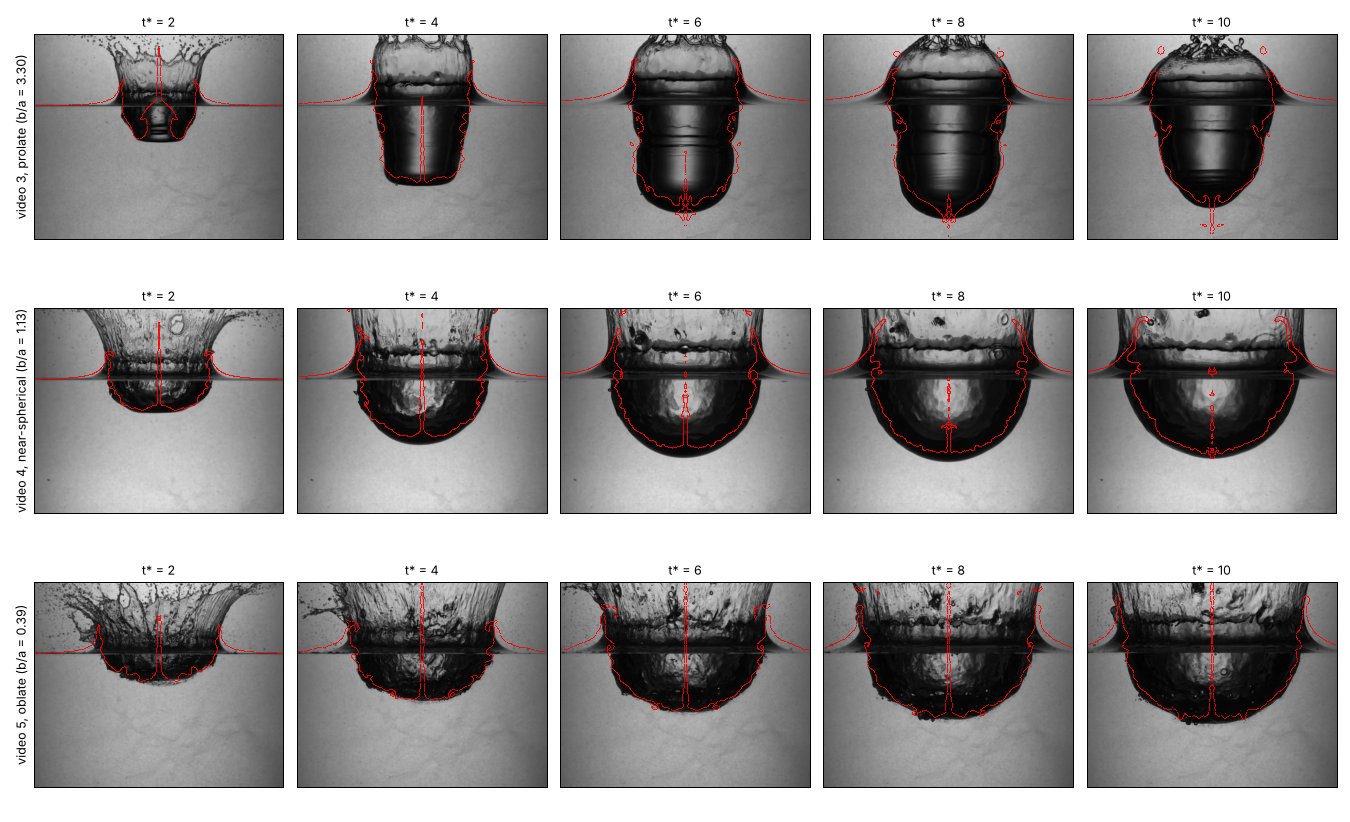
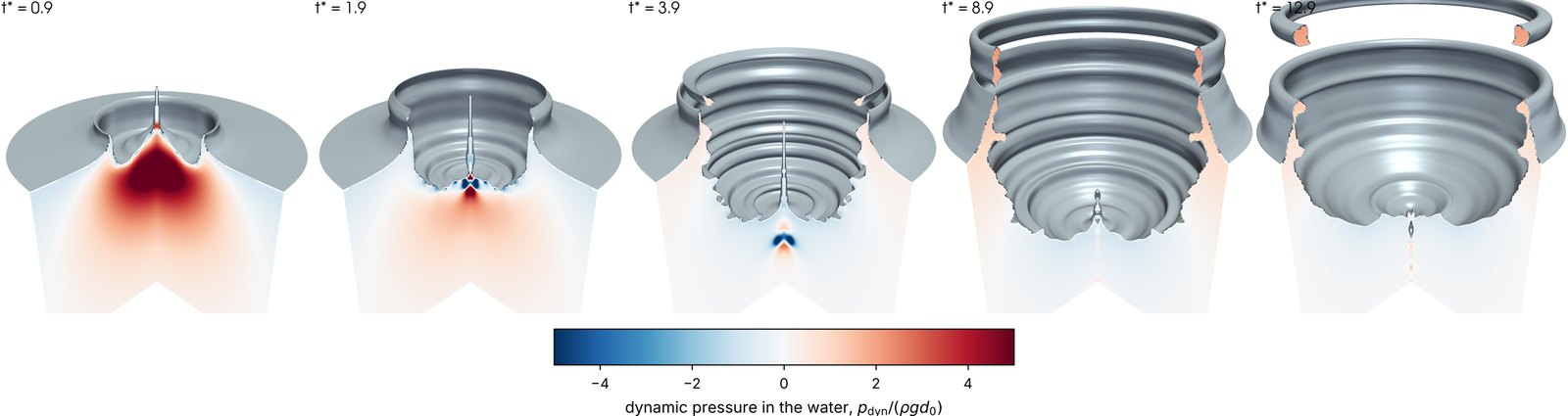
- Reproduced published high-speed camera experiments of large water drops striking a pool, then used the model to reveal the pressures and flows inside the liquid that the camera cannot see.
- Outcome
- Simulated cavity shapes match the experiments across drop shapes, at the same scale and time, without tuning.
Droplet impact and icing on engineered surfaces
- Need
- Ice on aircraft and wind turbines starts with droplets hitting, spreading and freezing on a surface.
- What we did
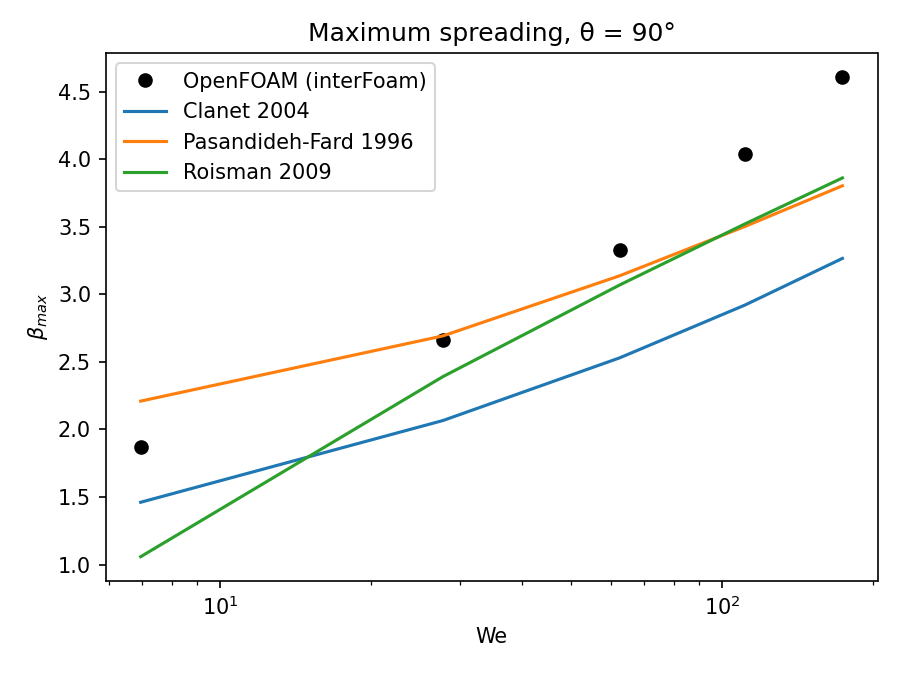
- Built a step-by-step simulation framework for droplet impact on surfaces of different wettability, extending to freezing on cold surfaces.
- Outcome
- Spreading predictions agree with established engineering correlations; the framework is ready for coating and surface comparisons.
Splash of large droplets on wet, rough ice
- Need
- Supercooled large droplets are a recognized aircraft icing hazard, and real ice surfaces are rough and wet rather than smooth.
- What we are doing
- Simulating how ridges and water films change splashing, which controls how much water stays on the surface and freezes.
- Value
- Better inputs for icing assessment and protection-system design.
Linking surface chemistry to freezing on icephobic coatings
- Need
- Icephobic coatings work at the molecular level, but their performance must be judged at the scale of a real droplet.
- What we are doing
- Coupling molecular simulation of the water–surface interface with engineering-scale CFD of droplet freezing.
- Value
- A route to ranking coating candidates by simulation before lab testing.
Instant prediction of laser heating
- Need
- Choosing laser settings by trial and error wastes machine time and material.
- What we did
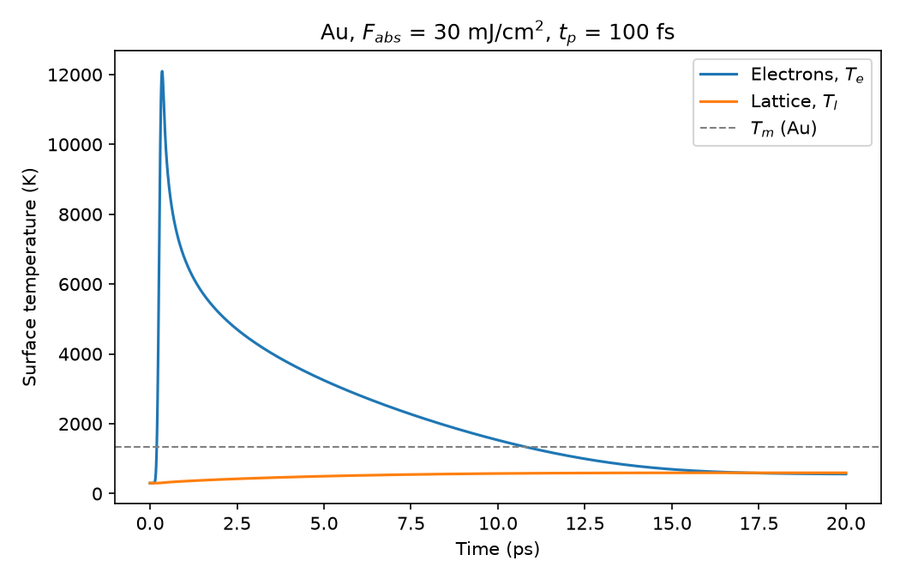
- Trained a fast machine-learning predictor on physics-based simulations of ultrafast laser heating of metal surfaces.
- Outcome
- Peak surface temperatures predicted in a fraction of a second instead of a full simulation run, for quick screening of process settings.
Accurate atomic-scale models for laser processing of titanium
- Need
- Titanium is central to aerospace parts and medical implants, and laser processing changes its structure in ways that are hard to measure.
- What we did
- Developed machine-learned atomic models of titanium, including the extreme conditions created by ultrafast lasers.
- Outcome
- Near quantum-level accuracy at a fraction of the cost, enabling simulation of how laser treatment changes titanium surfaces. Submitted for peer-reviewed publication.
Simulation you can trust
We check our models against experiments before using them to make predictions. These examples come from our case studies.
Our people

Dr. Ilemona S. Omeje
Computational physicist specializing in laser–matter interaction, multiscale modeling and surface wettability. He leads SOREC's research and consulting, including droplet studies for aerospace and biomedical applications.

Sanjay S. Ravigopal
Sanjay oversees SOREC's management, technology development and operational activities, bringing over five years of professional experience in software engineering, artificial intelligence and enterprise technology solutions.

Moses O. Alhassan
Moses supports SOREC's management and operations and contributes to its research, bringing the experimental perspective of a background in photonics, nanotechnology and physics.
Scientific advisors
Researchers who advise SOREC on a voluntary basis, bringing expertise beyond physics and engineering.

Dr. Djafar Iabaden
Researcher at Laboratoire Hubert Curien, France. PhD in Optics and Photonics, Université de Lyon / Université Jean Monnet, France.
Rabiu Musa
PhD candidate in Biological Sciences, University of Southern Mississippi, USA.
Work with us
For collaboration, contract research or consulting inquiries, send a message or reach out directly by email.